
A Threshold and a Cell
Notes on a platform and the solstice of a life

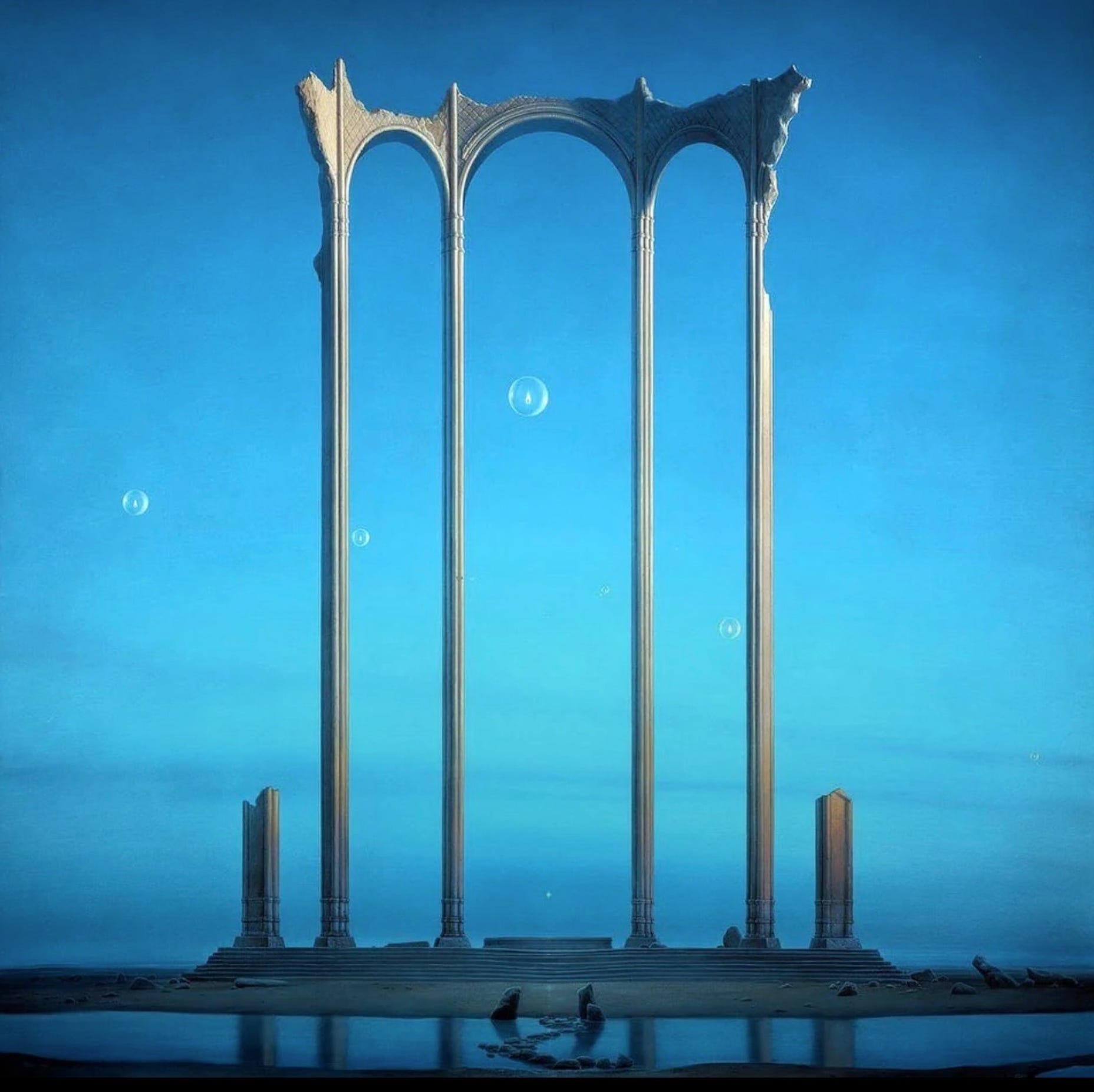
The corridor and never the room, the held breath and never the word it was holding, the platform and never quite the train: these are the liminal spaces, the only spaces, I have ever known. I notice it now mostly in small silences: a room gone quiet a beat too long, a shoreline or a stand of trees uncannily frozen when the wind drops and even the birds go still. In those gaps, without summoning it, a night in my late twenties, December 21st, 2008, the winter solstice itself, the day Chicago’s instruments at O’Hare logged ten degrees below zero and never managed, even at their most generous hour, to climb past five, the record cold arriving on schedule with the year’s longest dark as if the solstice had specially ordered it, is where I go back.
Roosevelt Rd. CTA, the green line elevated. Two in the morning. The storm had already come in fast and dry, powder that doesn’t so much fall as get deposited, four feet of it already on the ground and still arriving, unhurried, weightless crystals that defied gravity. The wind moved through every gap on the L, into one long low note threaded underneath the deeper silence of snow landing on snow, and beneath that, smaller, more private, into the steel itself, ticking and contracting as the cold worked all the way into it. No salt trucks yet. The green line, already stopped, would not start again until four.
My feet stopped answering me sometime in the first half hour. Not numb in the ordinary sense. Past numb, into the place where the body starts negotiating what it can afford to keep warm and what it has decided, quietly, to let go. My breath held its shape in the cold air for a second before the wind took it apart. The cold stopped registering as pain somewhere in there and became something closer to pressure: ambient, structural, less a thing happening to me than a fact I now lived inside, the way you live inside the dark.
Against a far wall in the far corner, a cat had wedged itself. At some point, it stopped shivering.
I looked off east toward where the lake should be, black and white, the street lights below cycling orange and red at intervals, the snow catching the color for a second and going neon before it let the color go and turned white again. I had two hours, conservatively, before a train would come for any of us.
A young woman slowly clodded up the stairs. Her steps press on the chamfered stair edges like a clock mechanism slowing as she climbed. Stood still for a moment when she reached the top then shambled towards the heat-incubator and pressed the button. Nothing happened. She did not look surprised. We did not speak. We stood several feet apart for close to fifteen minutes, watching the cat go still together.
Though we were partially obscured from the wind, a sudden backdraft crushed against us and she slipped on a small patch of ice. I reached for her, and before I'd even fully outstretched my arm she was already in it, against me, her shoulder finding the gap under my coat the way water finds the lowest point it can reach. We stood like that for over two hours.
It was not romance. It never became romance, not in two hours of standing still in subzero wind with a woman whose name I never learned. It was older than that, plainer than that predating language that had no need of it. Her breath found mine without either of us arranging it. What I remember most, more than the cold, was the slowing: she was shorter than me, her cheek pressed flat against my sternum, but she held on so tight that I felt her heartbeat low in my stomach before I felt it anywhere else, a second pulse arriving from underneath where her face was pressed, and it slowed, fast then steadier then slower, until it found mine, until there was only the one rhythm between us, the shape of her pressed into the form of mine, a single four-chambered heart split across two bodies and mirroring itself just to keep us both alive. When I shifted my weight she would constrict against me, a fraction, an adjustment too small to be a decision, the body still negotiating its own warmth in a conversation neither of us was having out loud. Her hair smelled like jasmine, somehow, a small bright thing that had no business surviving the night and did anyway, pressed there under my chin. I did not think, standing there, about a future with her. I thought about four a.m. I thought home. I thought about keeping us both alive until then. It was one of the most meditative things that has ever happened to me, and one of the most frightening, and I have never since found those two states sitting that close together in the same two hours.
That I was rehearsing, standing there, I did not know. Only waiting for a train is what I thought I was doing.
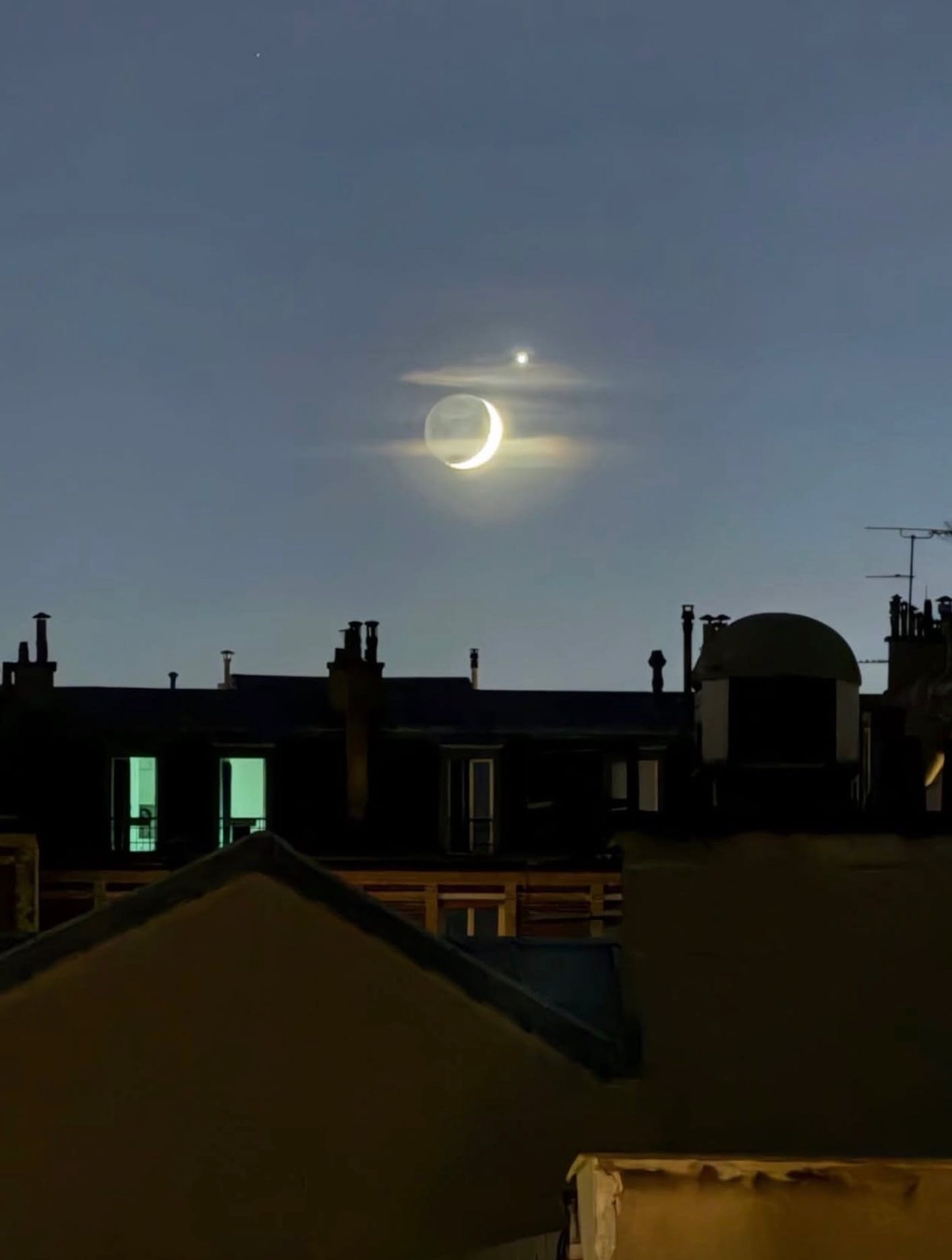
Forty-five is not a number I expected to feel. I expected the ones with weight—eighteen, twenty-one, thirty, forty, the ones the culture hands you with instructions— but forty-five arrived without ceremony and instead through a different mechanism: I noticed, somewhere in the early part of this year, that I have spent most of my life on platforms. Not literally, though there was that night. Structurally. Between the thing that already happened and the thing that has not yet arrived. Between the version of myself my grandfather heard in his study and the version I have built since. Between the South Side I am from and the page I am trying to put it on. Between a man who is done grieving and one who has not yet finished building.
The summer solstice is the year’s own platform: the longest threshold, the day light holds open the door the widest before it starts, almost imperceptibly, to close again. I am writing this in that window of a Life. Forty-five, mid-year, the light still arriving early and leaving late, and I find I trust this position more than I trust arrival. I have built an entire writing year, the Substack, the fools, meditations on society and longing and the metabolic weight of being, out of the conviction that the threshold is not a place you pass through on your way to somewhere realer. It is the place. The waiting is the work.
But the thing I did not understand that winter night and have only understood by writing my way backward into it this year: there is a difference between standing at a threshold and being stranded at one. Between liminality as a discipline and liminality as a sentence you have been quietly serving without trial. I have spent a year discovering which one I had built. I have spent a year, frankly, finding out I had built both, in different rooms of the same house.
I did not start this year to investigate victimhood. I started it to write fools: Homais, Malvolio, the Fool in Lear, Tartuffe, the comforters who sat with Job and made his suffering worse by trying to explain it. But you can’t spend a year inside other men’s self-deceptions without your own becoming visible by contrast, the way a dark room reveals itself once you light a single candle in the hallway. The fools taught me to watch for the moment a man mistakes the story he tells about his wound for the wound itself. And somewhere in the middle of that work I had to turn the same instrument on my own ledger.
Here is what I found, stated as plainly as I can state it: victimization, the sustained narrative identity of victimhood rather than the suffering that produced it, is a metabolic output, something that requires energy to manufacture, energy to maintain, energy to defend. Suffering is what was done to you. Victimization is what you do with it every morning when you wake up and decide what you are.

My own ledger, then, because the argument earns nothing if I exempt myself from it.
My maternal grandmother died when my mother was seven. My mother was handed, still grieving, to a life that required her to be self-sustaining before she had finished being a child. What she became, guarded, self-sufficient to the point of emotional inaccessibility, constitutionally unable to offer the warmth a child understands as mattering, was not a failure of character. It was an adaptation to a formation she did not choose. I could hold this intellectually, turn it over, feel something like sympathy for the small girl she had been. And I was still angry. Still short with her for decades, for reasons she could not see. I carried two slaughtered grandfathers, a father who left early, and a mother present but unreachable, the way you carry a credential: proof that I had been failed, proof that whatever I had not yet built was understandable given the materials I’d been handed.
The chip on the shoulder is a strange thing to examine up close. Not grotesque so much as alien: a shape your mind recoils from because it is a part of you not formed from the womb. It presents as injury but functions as permission. I needed the exception. I needed the story of what I had not received in order to justify the distance I kept from my own full capacity. The narrative was useful. It explained things. It organized the grievance into something that felt like knowledge. And it cost, conservatively, well over a decade of energy that could have gone elsewhere.
A faultless memory weighs the way a vault weighs — not heavy in any single moment but heavy in its total, the slow compounding interest of every transaction never permitted to fade, every grief and every grace kept at full fidelity while other memories soften theirs at the edges out of mercy. I have one of those memories. I did not request it. It keeps a ledger I can’t close, denomination by denomination, of every counteroffer extracted from my bargains with fate, every version of myself I traded for passage through a year I would not otherwise have survived. Hindsight, for a memory like that, is not a comfort. It is an audit. It is also the only way old grievance ever turns into anything more useful than ache: by making me look directly at what happened instead of letting time soften it into something easier, and more flattering, to carry.
What changed was not forgiveness. Because the forgiveness instruction, wrapped as it usually is in therapeutic or spiritual packaging, has always struck me as a kind of spiritual gentrification: the demand that you renovate your interior to make other people more comfortable in it. What changed was quieter and more structural. The story simply stopped being worth what it cost. Not because my mother had changed or because the losses weren’t real. The wound had simply stopped producing anything I needed. I went around the wall instead of through it. I stopped requiring her to have been different in order for me to be present with who she actually was. And something in her registered the change, not because I announced it or because we had the conversation people insist you need to have, but because genuine behavioral change is legible. People feel when they are no longer being held responsible for your unfinished business.
The goal, I suppose, was to build something with your hands that wouldn’t exist if it hadn’t.
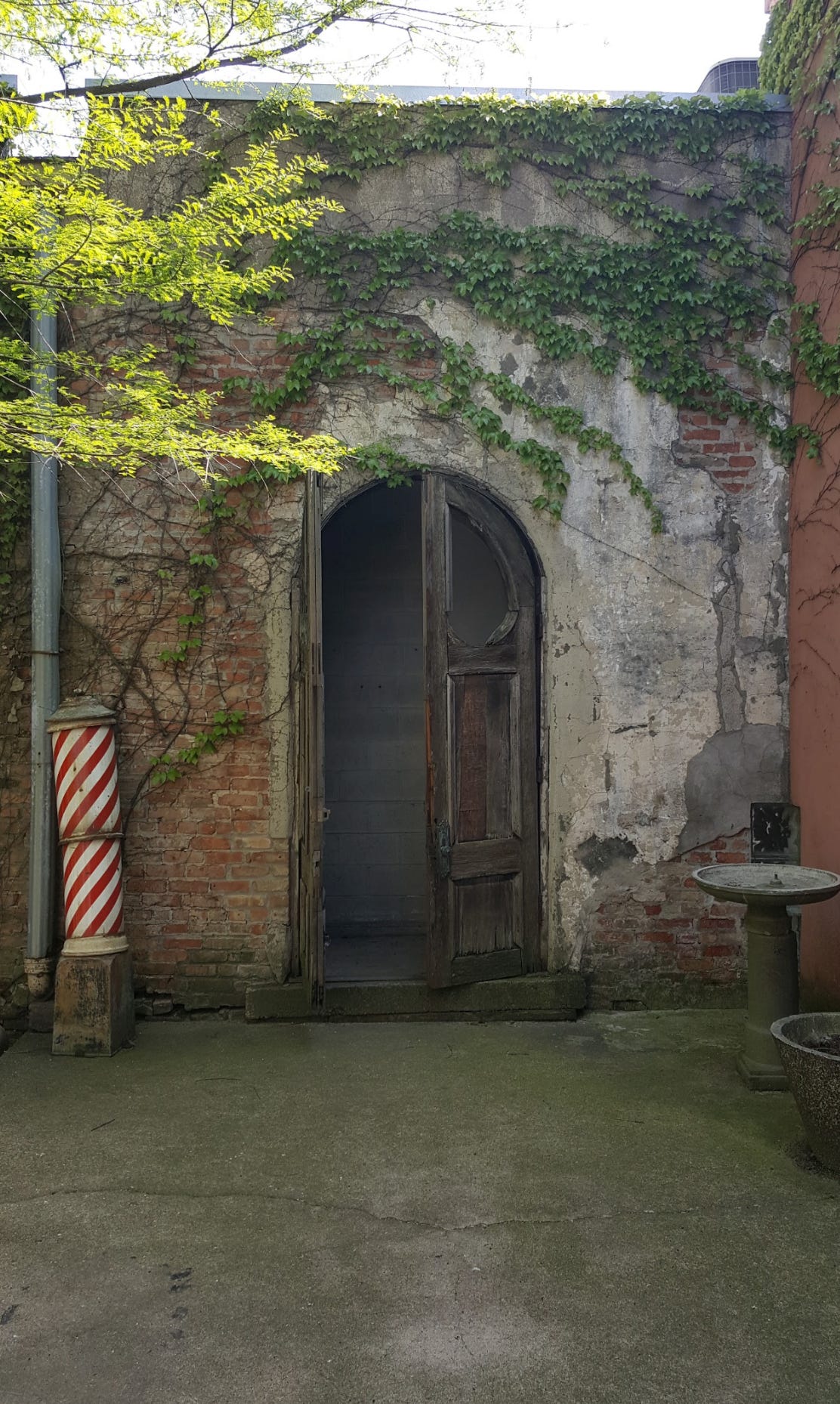
This is where the platform and the ledger turned out to be the same.
A threshold and a cell can look identical from the inside. Both are defined by not-yet-arrived. You can’t tell them apart by the walls. The difference is whether the waiting is producing a trajectory or producing a self. Liminality, practiced as discipline, is the condition every real piece of work passes through: the draft that is not the book yet, the man who is not the father he is trying to become yet, the platform between the station you left and the one that has not pulled in. Liminality, mistaken for identity, is the platform you have furnished: the place you have decided to live because at least the cold is familiar, at least the waiting has a name, at least no train arriving means no responsibility for boarding it.
I have spent a year writing fools because fools are men who have furnished their platforms. Malvolio in his garden, certain the letter was meant for him. The comforters around Job, certain their explanation was a gift. Homais in his pharmacy, certain his credentials excused him from ever standing in uncertainty without a label for it. Every fool I have written this year is a man who mistook the threshold for a destination and built a house there instead of waiting to be called forward.
The wound is real, the formation is real, and the years spent in the sanctuary of grievance, burning toward the maintenance of a story that explained everything and built nothing, are not recoverable either. They happened. They cost what they cost. The question now is not whether the burning was justified, but what it is producing.
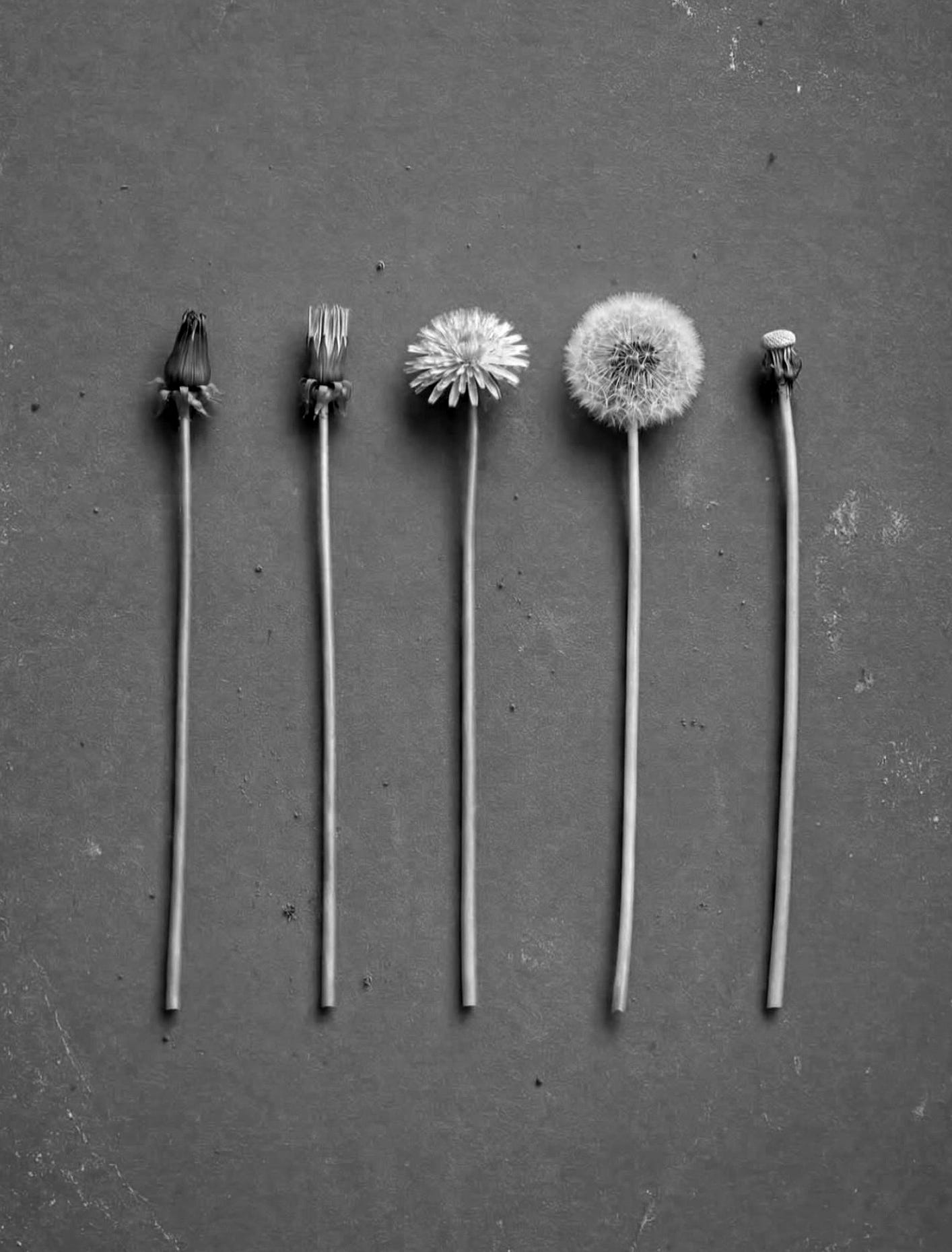
I stopped being angry with my city. Angry with its liminality. Stopped being angry with myself. Not because the city stopped failing me. A transit system that leaves two strangers and a dying animal in subzero wind for two hours and calls it a delay has failed, plainly, and no beauty that happened inside that failure redeems the failure itself. That part of the ledger is real, and I am not interested in revising it away. What I stopped doing was letting that failure become the architecture I lived inside.
There is a version of me, formed by the grievances I have spent this year examining, who would have furnished that platform: made it a room in the house of injuries he was building, told the story at dinner as proof of how little anyone ever came through, filed the cat under everything else nobody had saved.
A woman I never spoke to and never saw again crossed the same threshold I did, with no more information than I had, and decided to walk toward warmth instead of waiting for the city to provide it. I gave her my coat. She gave me two hours of a heartbeat finding mine without instruction. We built two hours of survival, which turned out, against every odd available to us that night, to also be beautiful.
The orange line to Midway came first. We held each other’s eyes the way you hold something you are setting down carefully. Neither of us waved. I did not know where she was headed, and did not need to. I only know what I wanted for her, in the silence: that she make it home. I have given this scene more meaning over the years than she may have. I don’t know if she remembers it at all. I have never let myself imagine that she doesn’t. The doors closed. The train took the only proof that any of it happened, and I was alone again with the cat and an hour left before my own train arrived.
The cat was dead by then.
My train came after four. It does not always come.
Forty-five, mid-year, the light still arriving early. I am not done. I am between. I have finally stopped confusing the two.
A beautiful distinction between the "furnished platform" and the "disciplined threshold". It made me think of the difference between meditation and liminality. ie, one is the art of observing the "now" without bias, the other is the discipline of moving through the "not-yet". The "fool" is the one who stops the drift and builds the house in the waiting room. Sometimes I wonder whether I am the cat...
I love this meditation. And the train story. The metabolic cost of perpetuating victimhood is really insightful (and very hard to sit with). Thank you for this.